





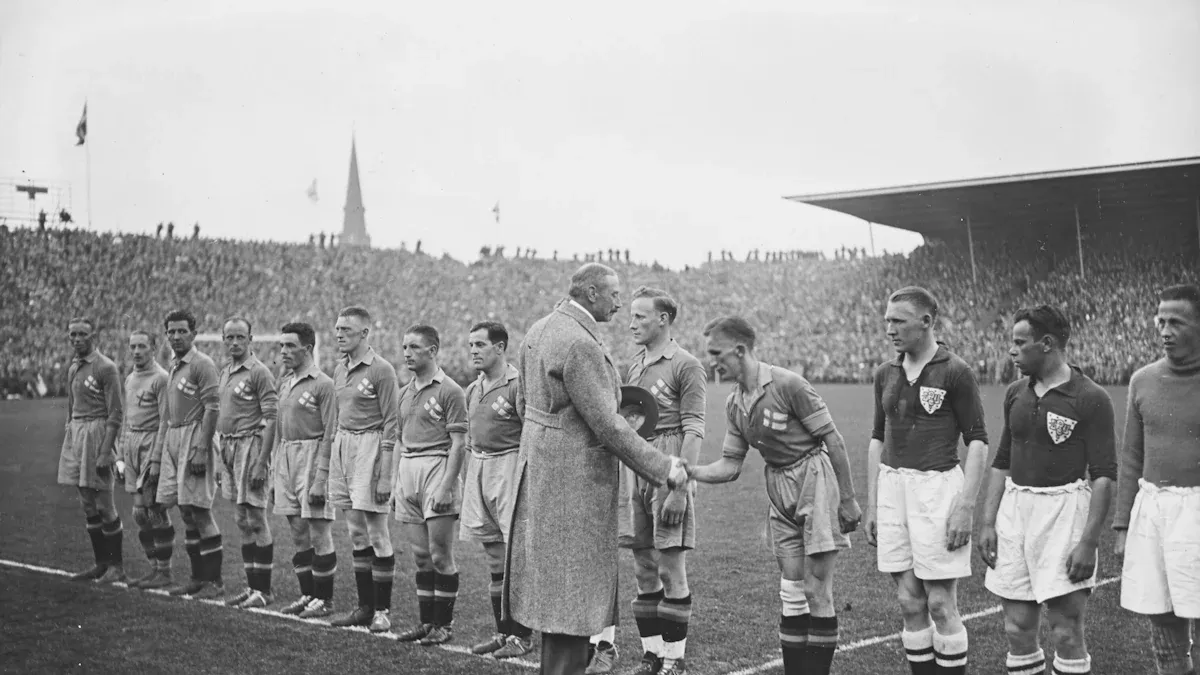
Football started many centuries ago and grew into a global sport. Today, over 265 million people play football actively. Each year, youth participation rises by 4%. Events like the FIFA World Cup bring cultures together. For example, in 2022, one match had 1.5 billion viewers. Football’s popularity helps people connect across countries. Fans of football talk to more people internationally than non-fans. Whether watching a local game or supporting your team, football unites people. It brings together different generations and countries.
Key Takeaways
- Football has a long history, starting from old ball games.
- Big events like the FIFA World Cup bring people together.
- Technology like smart devices and AI helps players stay safe.
- Football helps fight unfairness and supports communities through charities.
- The game builds friendships, breaks walls, and includes everyone, especially women.
The Origins of Football
Ancient Ball Games in Early Civilizations
The history of football goes back to ancient times. Early ball games were the start of the sport we know today. In China, soldiers played “Tsu Chu” around 5000 B.C., kicking a leather ball into a target. The ancient Greeks had “Episkyros,” a team game with strategy and physical moves, shown on pottery. Romans later created “harpastum,” focusing on teamwork and skills.
In Japan, “Kemari” began around 1000 B.C. It was like hacky sack but played on a field. Mesoamerican cultures invented a ball game with rubber balls. Players aimed to pass the ball through a ring on special courts. Spanish explorers in the 1500s admired the skill and effort needed for these games, showing their cultural importance.
Archaeologists have found proof of ball games worldwide. In Scotland, a football field from the 1600s was marked with stones. In Egypt, leather balls from 1189 B.C. were found in tombs, showing early team sports. These discoveries reveal how ball games spread and shaped football.
| Civilization | Evidence Description |
|---|---|
| Ancient Greeks | “Episkyros” was a team ball game shown on pottery. |
| Ancient Romans | “Harpastum” was a Roman ball game based on Greek ideas. |
| Scotland | A 17th-century football field in Kirkcudbrightshire had stone markers for play. |
The Codification of Football Rules in England
Futebol became an organized sport in England during the 1800s. Before this, games were wild and rough. In 1331, King Edward III banned football because it caused problems. In 1424, Scotland’s King James I also stopped the game for being too violent. Still, people kept playing because they loved it.
In 1815, Eton College made rules to organize matches. These rules focused on fairness and order, shaping modern football. In 1863, the Football Association was formed in England. This group created official rules and separated football from rugby. The first international match happened in 1872 between Scotland and England. It ended in a tie.
These changes made football more organized and fun for everyone. Clear rules helped the sport grow into the worldwide game it is today.
| Year | Localização | Description |
|---|---|---|
| 1331 | England | King Edward III banned violent football games. |
| 1424 | Scotland | King James I outlawed football for being too rough. |
| 1815 | England | Eton College made rules for fair football games. |
| 1863 | England | The Football Association was created, splitting football from rugby. |
| 1872 | Scotland | Scotland and England played the first international match, ending in a tie. |
The Formation of Early Football Associations
Football associations helped shape the sport into what it is today. In North Staffordshire during the 1850s, informal games led to clubs like Stoke City Football Club. Local groups, such as the Staffordshire Football Association, built a strong football culture in Britain.
Schools in Manchester also played a big role. Teachers and the Manchester Schools Football Association encouraged students to play from 1880 to 1919. Records show how these efforts grew competitions, making Manchester a key place for football.
These associations didn’t just make rules. They gave communities chances to enjoy football. Their work helped create professional leagues and global tournaments, keeping the sport popular.
Note: Local groups and teachers played a big part in growing football. Their efforts at the community level helped the sport thrive.
Football’s Global Expansion
How Football Spread Around the World
Have you ever wondered how football became so popular worldwide? It started spreading during European colonial times. British sailors, soldiers, and traders brought the game to places like Africa, Asia, and South America. Futebol wasn’t just a game; it helped people connect across different regions.
In 1904, FIFA was created to organize international football. This group showed how the sport was growing beyond Europe. Over time, football became a symbol of global unity. It spread through trade, migration, and sharing cultures.
Here’s a timeline of how football expanded:
| Year/Period | Event/Development | Region/Continent |
|---|---|---|
| 1863 | First football association formed in England | Europe |
| 1874 | German schoolteachers introduced football | Europe |
| 1967 | Two pro soccer leagues started in the US | North America |
| 1994 | US Soccer promised a pro league for World Cup bid | North America |
| 1996 | Major League Soccer began | North America |
Futebol didn’t just grow as a sport. It became a way for people from different countries to share their cultures.
International Competitions and Their Impact
Competitions between countries made football even more popular. The FIFA World Cup, starting in 1930, became the biggest event in the sport. It gave countries a chance to show their skills and love for football.
The Olympics also helped football grow. Olympic matches drew big crowds and made the sport more famous. These events weren’t just about winning. They were about pride, teamwork, and love for the game.
FIFA divided the world into regions, each with its own confederation. This system kept football organized and truly global.
Fun Fact: Over 1.5 billion people watched the 2022 FIFA World Cup final. This shows how football brings people together worldwide.
Professional Leagues and Their Rise
Professional leagues turned football into a huge industry. Clubs started hiring skilled players, and fans supported their favorite teams. Germany’s Bundesliga began in 1963 and became very successful. In 1996, Major League Soccer brought professional football to the US.
Money also helped leagues grow. For example, Milan AC’s earnings rose from 29.3 million euros in 1990 to 177.1 million euros in 2002. Between 2006 and 2015, top leagues grew by 5.62% each year.
| Club | Year | Revenue (in million euros) |
|---|---|---|
| Milan AC | 1990 | 29.3 |
| Milan AC | 2002 | 177.1 |
| Top Leagues | 2006-2015 | 5.62% annual growth rate |
Professional leagues didn’t just focus on games. They gave players, coaches, and fans more ways to enjoy football. Today, these leagues are a big reason why football is loved worldwide.
The Modern Game of Football
Technological Innovations in Football
Technology has changed how people play and watch football. Wearable devices now track players’ movements and health. This helps coaches improve training and avoid injuries. In 2023, over 700,000 plays used wearable tech. High schools in 44 states added this technology to their programs. Division I teams also use it, doubling or tripling practice reps.
Player tracking systems use GPS and RFID to gather live data. This helps teams analyze performance better. Video tools like HUDL break down plays and strategies for improvement. Artificial intelligence (AI) finds hidden talent by studying data. Teams like FC Barcelona and Germany’s national team use these tools. Germany even won the 2014 FIFA World Cup with these advancements.
| Statistic | Value |
|---|---|
| Plays using wearable tech (2023) | 700,000 |
| States with high school programs using it | 44 |
| Division I programs adopting it | 10% |
| Practice reps increase | 2x-3x |
The Role of Digital Platforms and Social Media
Social media has made football more accessible than ever. Apps like Instagram, YouTube, and TikTok let fans follow teams instantly. Real Madrid and Barcelona each have over 100 million Instagram followers. In 2023, Real Madrid had 1.6 billion engagements, while Barcelona had 1.3 billion. Their posts get over 400,000 views on average, showing social media’s power.
Gen Z prefers watching football content on YouTube and Instagram (63%). TikTok (49%) and Twitter/X (35%) are also popular. These platforms connect fans and help clubs reach global audiences. Whether it’s match highlights or behind-the-scenes clips, social media keeps fans involved in the game.
The Commercialization of Football
Futebol has become a massive industry worth billions of dollars. The FA Premier League alone earns billions yearly. Clubs like Manchester United have 50 million fans worldwide. By 2033, the football market is expected to grow from USD 3.41 billion to USD 4.71 billion, with a 3.46% annual growth rate.
Money comes from selling merchandise, broadcasting rights, sponsorships, tickets, and player transfers. For example, jerseys and scarves help fans feel closer to their teams. Broadcasting rights bring games to millions of viewers. Some governments, like China’s, support local programs to grow the sport. This business side of football keeps it popular and powerful.
Tip: The economic success of football shows how it connects people worldwide. It’s more than just a game.
Football’s Cultural and Social Significance
Football as a Reflection of National Identity
Football shows how nations express their unique identities. Fans in stadiums wave flags, sing chants, and act in ways tied to their culture. These actions reveal deeper connections between football and society. In Europe, tournaments like the UEFA European Championship bring out national pride. Fans cheer for their teams, creating unity and shared pride beyond personal differences.
In the U.S., football mixes entertainment with national values. It reflects ideas that highlight the country’s history and beliefs. National teams unite players from different backgrounds. This shows how football can bring people together and build strong social bonds.
- Europe celebrates nationalism through football, especially during big tournaments.
- The UEFA European Championship shows high levels of national pride.
- National teams unite players, promoting social unity and shared pride.
Advocacy and Social Change Through Football
Football is a strong force for social change. It shines a light on problems like inequality and injustice, inspiring fans to act. Players and clubs often lead campaigns for fairness and inclusion. Women’s football has grown, sparking talks about gender equality.
Football also supports charity work. Teams and players help communities through education programs and disaster relief. These efforts show football’s power to make a difference beyond the field.
Tip: Football isn’t just a sport. It motivates people to challenge unfairness and work for a better world.
Football’s Role in Uniting Communities
Football connects people by breaking barriers and building friendships. Playing or watching football links you to fans worldwide who share the same passion. The sport crosses borders, giving people a sense of belonging.
Football also promotes inclusion. Women’s football has grown, encouraging equality and inspiring girls to follow their dreams. Clubs use football to tackle social issues, bringing people together for good causes.
- Football connects people globally, creating identity and driving social change.
- It highlights social problems and inspires fans to support charities.
- Women’s football grows, sparking talks about equality and inclusion.
Football’s ability to unite makes it more than a game. It becomes a shared experience that connects communities everywhere.
Football has grown from old ball games into a worldwide sport. It connects people from different cultures and shows unity. Big events like the FIFA World Cup bring countries together.
- Football’s history includes:
- Starting as ancient games and becoming organized in the 1800s.
- Helping communities and the world feel connected.
- Building pride and teamwork through global competitions.
In the future, football will keep shaping society and technology.
| Trend Type | Examples and Effects |
|---|---|
| Player Safety Technology | Wearable devices and AI tools help players stay safe and perform better. |
| New Ways to Engage Fans | AR apps and social media make games fun for younger fans. |
| Eco-Friendly Efforts | Zero-waste plans attract eco-friendly fans and improve football’s image. |
Football’s strength is in bringing people together. It promotes peace, fairness, and change.
Fun Fact: During the Ivory Coast Civil War, football star Didier Drogba asked for peace. His message helped stop the fighting, showing football’s power to unite.
FAQ
Where did football come from?
Football started as ball games in ancient times. People in China, Greece, and Rome played these games for fun and practice. Over many years, these games turned into the sport we know today.
How did football become popular worldwide?
Football spread during European colonization and trading. British sailors and traders brought the game to new places. In 1904, FIFA was created to organize global matches, making football a worldwide symbol of unity.
Why is football more than just a game?
Football brings people together and inspires change. It shows national pride and culture. Players and teams support fairness and charity, encouraging communities to take action. Football helps fans feel connected and part of something bigger.
How has technology changed football?
Technology makes football better for players and fans. Wearable gadgets track health and movements, while AI finds talented players. Social media lets fans follow teams easily, making football more exciting and reachable.
Why do so many people love football?
Football is easy to play and includes everyone. All you need is a ball and space. Big events like the FIFA World Cup bring countries together. Football’s power to unite people makes it loved all over the world.

 Portuguese
  English
  German
  Arabic
  Spanish
  French